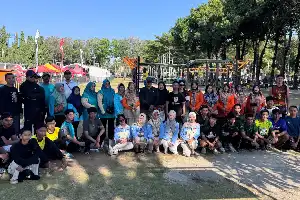
The community service team from the Universitas Sumatera Utara (USU) has officially initiated the Fostered Village Program in Rabuhit Village, Gunung Maligas District, Simalungun Regency. This strategic step aims to reduce the high production costs of the local agricultural and livestock sectors through the utilization of appropriate technology.
The Head of the USU Proposing Team, Dr. Amlys Syahputra Silalahi SE., M.Si., explained that this program was launched as an answer to the residents' dependence on expensive commercial animal feed and chemical fertilizers. In addition to economic factors, the accumulation of crop residues and livestock waste that has not been managed properly has often triggered environmental pollution in the village settlements.
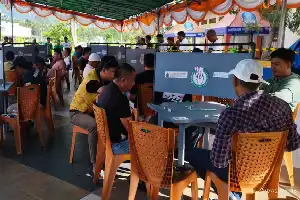
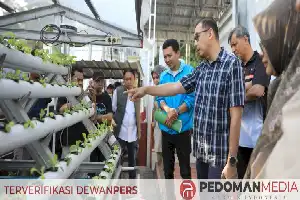
Through this program supported by the USU Community Service Institution (LPPM), local communities and farmer groups received hands-on skills training. The academic team also distributed pelletizer machines to produce self-sufficient feed for catfish and chickens, as well as granulator machines to process cow and goat manure into high-quality, ready-to-sell organic fertilizer.
This initiative involves a team of multidisciplinary experts from USU, including Prof. Dr. Tulus (FMIPA), Ir. Peni Patriani, Ir. Tati Vidiana Sari, and Helova Leonard Panjaitan (Faculty of Agriculture), as well as Hendrik Voice Sihombing (Faculty of Engineering). This empowerment program is projected to run sustainably until November 2026 to realize the concept of a zero-waste region.
The Head of Rabuhit Village (Pengulu), Rohiman, welcomed the implementation of this technology, which is expected to create new independent business units for residents. In addition to boosting the local economy, this program is designed to align with the achievement of the Sustainable Development Goals (SDGs), particularly in improving environmental health quality and community welfare equitably.