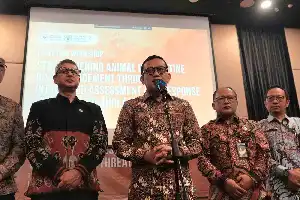
The 2027 Macroeconomic Framework and Main Points of Fiscal Policy (KEM-PPKF) presented by President Prabowo Subianto during a recent plenary session of the House of Representatives (DPR) marks a strategic move by the government in responding to global economic challenges. Amid the dynamics of trade wars, interest rate fluctuations, and geopolitical tensions, the government maintains an optimistic economic growth target of 5.8 to 6.5 percent for 2027.
The main focus of this policy is to strengthen the domestic economic foundation through a pro-people state budget (APBN). The government realizes that the main issues currently faced include weakening public purchasing power and stagnation in the industrial sector due to slowing household consumption. Therefore, maintaining energy price stability is a priority to ensure manufacturing production costs remain moderate and capable of stimulating job creation.
One concrete step expected from this policy is the protection of the domestic market from an influx of illegal imported products. Smuggling and dumping practices that have been pressuring local business players are receiving serious attention. Strict enforcement of regulations regarding the flow of imported goods is expected to revive the national industrial sector and create higher quality new jobs.
Furthermore, the government is committed to continuing the recovery of MSMEs, a sector that has long served as the backbone of the national economy. The successful write-off of bad debt for millions of farmers, fishermen, and small business owners under Government Regulation (PP) No. 47 of 2024 is seen as an important foundation. The government is now striving to realize Rp1,314 trillion in foreign investment commitments to complement the all-out measures announced for economic recovery.
However, the effectiveness of this fiscal policy heavily depends on consistent law enforcement and bureaucratic efficiency. Eradicating Corruption, Collusion, and Nepotism (KKN) as well as overhauling slow bureaucracy are absolute prerequisites. Without a clean and efficient governance ecosystem, achieving the high growth targets in the 2027 state budget will be difficult to maximize.