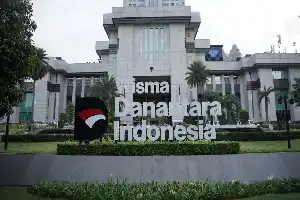
The Ministry of Health (Kemenkes) is committed to strengthening the national health resilience system through the acceleration of primary healthcare services transformation. This strategic step was discussed in depth at the Leimena Conference 2026: Indonesia Primary Health Care Scientific Meeting, held at the National Research and Innovation Agency (BRIN) Building in Jakarta.
Director General of Primary and Community Health at the Ministry of Health, Maria Endang Sumiwi, explained that this reform changes the healthcare paradigm in the country. While it was previously oriented toward specific programs, services are now focused on meeting needs based on the life cycle of the community, from infants to the elderly. This step is a continuation of the health system evaluation following the COVID-19 pandemic.
This new service model was previously piloted in nine regions over the 2022–2023 period. The government then formalized this model as a national standard through a Decree of the Minister of Health in 2024. Currently, approximately 9,000 Puskesmas, equivalent to 87 percent of all Puskesmas across Indonesia, have adopted the transformation system.
Strengthening the health system does not only target Puskesmas but also reaches the integrated health service post (Posyandu) level. Since 2023, the Ministry of Health has registered around 1.5 million Posyandu cadres to map their competencies. To date, 303,209 Posyandu are recorded as active in providing monthly services supported by trained cadres.
To maintain service quality, the Ministry of Health has established a standard of 125 basic skills that Posyandu cadres must master. Periodic evaluations have also been conducted for around 485,000 cadres. Along with this, the Ministry of Health launched the latest health service guidelines for villages and sub-districts so that medical personnel can map vulnerable groups in their respective working areas in a more personalized and targeted manner.
The scientific conference, themed "Integrating Research into Primary Health Care," was attended by 450 participants in person and followed by thousands of other participants via online platforms. The Ministry of Health received around 700 scientific research abstracts, 537 of which will be compiled into proceedings, and the best studies will be published by the Faculty of Public Health, Universitas Indonesia (FKM UI).
This national-scale agenda is also supported by international organizations such as UNICEF, WHO, and the Global Fund, which provided travel assistance for 80 participants from various regions. In addition, the Australian Government through DFAT, as well as the Bill & Melinda Gates Foundation through the Primary Health Care Consortium, also facilitated the smooth running of this scientific event.