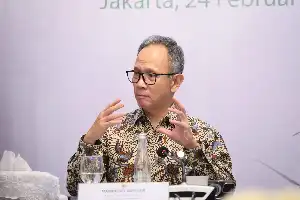
Indonesia is increasingly serious about expanding the export market coverage of its flagship products, especially palm oil and its derivatives, to the Eurasian region. This strategic step was highlighted through the Indonesia–Belarus Business Forum and Business Matching event held in Jakarta last Tuesday. The event served as a crucial meeting point for industry players from both countries to explore more comprehensive business collaboration opportunities.
The Indonesian Chamber of Commerce and Industry (KADIN) together with the Belarusian Chamber of Commerce and Industry (BelCCI) facilitated this forum to bridge investment needs and expand bilateral trade networks. Coordinating Minister for Economic Affairs of the Republic of Indonesia, Airlangga Hartarto, emphasized that in addition to palm oil, products such as rubber, cocoa, fishery products, and electronic products have very promising market potential in Belarus.
Data shows a positive trend in trade relations between the two countries, with the total transaction value reaching US$221.3 million in 2025. This figure represents a 30 percent increase compared to the previous year. This momentum is reinforced by the ratification of the free trade agreement between Indonesia and the Eurasian Economic Union (I-EAEU FTA), which has been signed by the President of Belarus, Aleksandr Lukashenko.
Belarusian Deputy Prime Minister Viktor Karankevich stated that the implementation of the free trade agreement would serve as the main foundation for increasing investment and commodity flows. He also supported the establishment of the Indonesia–Belarus Business Council as an intensive communication channel to accelerate the execution of strategic projects on the ground.
The Indonesian government is optimistic that access to the Eurasian Economic Union (EAEU) market, which encompasses 180 million people and a GDP reaching US$2.56 trillion, will provide a significant boost to national exports. This synergy is expected not only to impact economic growth but also to create new jobs and support sustainable development in both countries.