PELALAWAN - The Pelalawan Indonesia Institute of Plantation Technology (ITP2I) has taken concrete steps to boost the productivity of smallholder oil palm plantations. Through its Community Service (PKM) initiative, the university introduced an innovative pollen-based pollination technology to help independent smallholders overcome the problem of low fruit set in their palm crops.
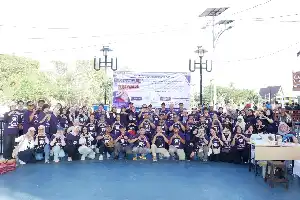
The training activity, which took place in Sorek Dua Village, Pangkalan Kuras District, Pelalawan Regency, targeted 30 independent farmers who are members of the Batang Balango Mandiri Farmers Association (PBBM). The program is designed to bridge academic research outcomes so they can be directly applied for the welfare of the local farming community.
Head of the Service Team and Vice Rector I of ITP2I, Salmiyati, M.Pd., Ph.D., revealed that the productivity of smallholder palm gardens is often hindered by suboptimal natural pollination. Thus far, farmers have relied heavily on the pollinating weevil Elaeidobius kamerunicus, whose population is vulnerable to fluctuations due to climate change and environmental conditions.
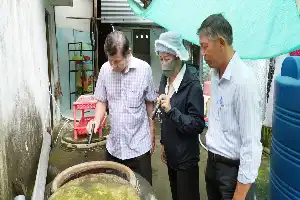
As a practical solution, the team of ITP2I lecturers and students shared their research-backed pollen technology formula. This technology includes pollen extraction techniques from male flowers, filtering with a special sieve, drying, and cold storage methods at minus 23 to 25 degrees Celsius to maintain pollen viability when applied to female flowers.
In addition to theoretical explanations, farmers were also guided to practice this artificial pollination method directly in the field. To ensure the sustainability of the program, ITP2I and the PBBM Farmers Group agreed to establish a demonstration plot (demplot) to serve as a shared learning center and evaluation space for the future effectiveness of the pollen technology.