The East Nusa Tenggara (NTT) Regional Police achieved a brilliant milestone on the international stage coinciding with the 80th Bhayangkara Day celebration. This regional police institution officially recorded two records from the Indonesian Museum of Records (MURI) for groundbreaking mental health services using the Ultimate The Source Body, Mind, Soul Emotional Freedom Technique (USEFT) method.
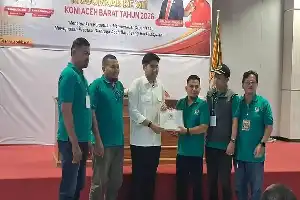
The prestigious award was handed over directly by the Operational Director of MURI, Yusuf Ngadri, to the NTT Police Chief, Inspector General of Police Dr. Rudi Darmoko, S.I.K., M.Si., in a ceremony at the NTT Regional Police Headquarters on Saturday (4/7/2026). This innovation is recognized as a pioneering step within the Indonesian National Police (Polri) involving dozens of work locations across the NTT region.
Based on verification conducted by MURI, the therapy program, which has been ongoing since June 12, 2026, successfully reached 11,663 participants. This achievement allowed the NTT Regional Police to claim two world records simultaneously: as the first regional police force to implement the USEFT method for officers and the public, and as the organizer of a serialized mental health therapy with the highest number of participants.
NTT Police Chief Inspector General Dr. Rudi Darmoko emphasized that the award was not the main goal, but rather a symbol of the police force's commitment to providing benefits to the wider community. According to him, mental health is an essential foundation for police officers to perform their duties with greater humanism, empathy, and professionalism.
"This program was born from our concern for the mental stress faced by both officers and the public. We want Polri to be present not merely as law enforcement, but also as an institution that provides psychological health support for others," said the Police Chief.
Through this achievement, the NTT Regional Police hope that the spirit of mental health awareness will continue. It is hoped that in the future, more police personnel will be able to act as drivers in providing emotional support, making mental health awareness a collective responsibility within society.