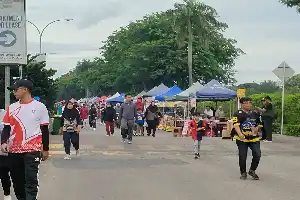
The phenomenon of office workers entering the business world is increasingly visible in various urban settlements, as observed at the MSME bazaar on Boulevard Asana Residence, Cibubur. Amid economic fluctuations and limited salary increases, building a small-scale business has become a strategic choice for many workers to secure their household financial conditions.
Iman Ratra, a media industry employee, revealed that the main motivation for shifting to entrepreneurship is not just chasing profit, but creating independence. For him, managing his own perfume brand since 2023 provides a space for creativity that he did not find in rigid corporate bureaucracies. In addition, this business supports daily needs through a sustainable, community-based operational model.
Sustainability strategies are also implemented by business owners like Iman, who introduced a refill system to minimize packaging waste while offering price incentives for customers. This approach has proven effective in attracting the local market without relying on bombastic digital marketing strategies, while still maintaining daily cash flow.
A similar sentiment was expressed by Delly Ferdian, a researcher at a non-profit organization, who saw an opportunity in the potential home culinary market. With limited capital, Delly leveraged connections and positive feedback from colleagues to build a frozen food business. For him, the key to running a side business is proper time management to ensure that the primary job remains a priority without sacrificing the quality of the business.
This trend among the middle class shows a paradigm shift in how economic stability is viewed. By leveraging social networks in their residential areas, they are able to create micro-economic systems that are independent, flexible, and resilient to the rising cost of living.