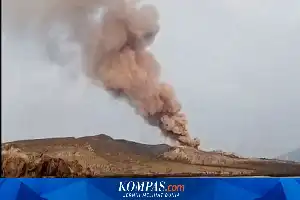
A group of researchers from the Technical University of Munich (TUM) and Johannes Gutenberg University Mainz have achieved a significant breakthrough in monitoring volcanic activity on the island of Vulcano, Italy. They utilized advanced unmanned aerial vehicle (UAV) technology to analyze gas emissions from volcanic craters without placing personnel in dangerous zones.
The UAVs used, including a device named 'Tina', are equipped with precision sensors to detect chemical concentrations, airborne particles, and halogen elements such as chlorine and bromine. With flexible flight capabilities, these drones can map gas concentrations in a short period while avoiding exposure to hot, corrosive air streams that could damage sensitive sensor equipment.
Experts explain that changes in the composition of gases released by volcanoes are crucial indicators prior to an eruption. Therefore, the ability of drones to collect accurate data in areas hard for humans to reach is an essential instrument for developing more responsive and safer early warning systems.
Following successful trials in the Aeolian Islands, the research team plans to test the effectiveness of this technology under extreme conditions on Mount Etna. This step is expected to validate the drones' ability to monitor volcanic activity in real time and provide valuable data for future disaster mitigation efforts.