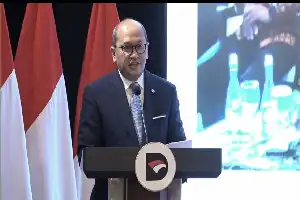
MEDAN – Legal issues rooted in business, civil, or state administrative relations cannot automatically be dragged into the realm of special criminal law such as corruption. This assertion was made by a criminal law expert from the University of North Sumatra (USU), Mahmud Mulyadi, during the trial of the alleged corruption case involving the sale of aluminum alloy by PT Indonesia Asahan Aluminium (Inalum) at the Medan Corruption Court.
Mahmud was presented as an expert witness by the defense team of defendant Djoko Sutrisno, President Director of PT Prima Alloy Steel Universal (PASU) Tbk. In his testimony, he explained that the element of abuse of authority—as regulated in Article 3 of the Law on the Eradication of Corruption Crimes and Article 604 of the National Criminal Code—falls under the domain of state administrative law, not criminal law.
According to Mahmud, the interpretation of whether or not there is an abuse of authority must constitutionally be tested first by experts in the field of state administrative law. If criminal law uses terms from another branch of law without providing a specific definition, then its interpretation must refer to that original legal discipline.
Furthermore, he emphasized the importance of applying the principle of ultimum remedium, which positions criminal law as a last resort or final weapon. As long as the dispute can still be resolved through civil or administrative mechanisms, those avenues must be prioritized first.
Mahmud also highlighted the aspect of malicious intent (mens rea) in inter-corporate business relations. A contractual relationship or trade debt/receivable does not inherently reflect the existence of a corrupt intent. Before proving the element of unlawful criminal conduct, law enforcement must ensure the dispute is not purely a business failure or civil breach of contract.
This case stems from a cooperation agreement for the sale of aluminum alloy between PT Inalum and PT PASU, which prosecutors allege caused state financial losses of Rp141 billion. On the other hand, the defendant Djoko Sutrisno has from the beginning maintained that the case against him is a form of criminalization of a legitimate business relationship, in which the agreement between the two parties actually included risk mitigation clauses such as force majeure and civil dispute resolution mechanisms.