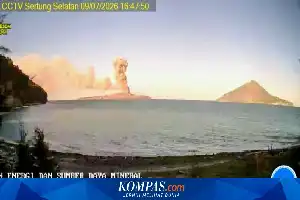
Mount Semeru, the highest peak on Java Island, is once again showing a significant escalation in volcanic activity. Following a series of eruptions since June 20, the Center for Volcanology and Geological Hazard Mitigation (PVMBG) has placed the volcano on Level III (Alert) status. This condition demands high vigilance from communities living around the slopes.
Dr. Indranova Suhendro, S.T., M.Sc., a geography expert from Gadjah Mada University (UGM), emphasized that the dangers of Mount Semeru are not limited to ejected materials during eruptions. An equally deadly threat is cold lahar flows triggered by heavy rainfall in the summit area. Volcanic material accumulated on the slopes can be swept away by river currents suddenly, even when downstream residential areas are experiencing clear weather.
According to Nova, river channels such as Besuksemut are the most critical points to monitor as they serve as the main pathways for volcanic material and pyroclastic flows. He stressed the importance of public compliance with exclusion zones established by relevant authorities to avoid fatal risks from large boulders and volcanic flows.
Amid the Alert status, sand mining activities in the region remain a serious concern. Nova acknowledged that economic dilemmas often outweigh safety considerations. Nevertheless, he suggested that if mining continues, business operators must implement extremely strict occupational safety procedures to protect workers from disaster threats that could occur at any moment.
Furthermore, Nova explained that the characteristics of Semeru's viscous, crystal-rich magma tend to form unstable lava domes on steep slopes. The combination of gas pressure from below and weather factors can trigger the collapse of these domes, creating large-scale pyroclastic flows similar to those in December 2021. Public education regarding the volcano's characteristics and discipline in adhering to expert recommendations are the main foundations for mitigating future disaster risks.