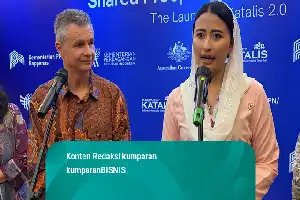
The gap between university research findings and industrial needs often poses a serious obstacle to healthcare innovation in Indonesia. Addressing this challenge, the Faculty of Pharmacy at Universitas Airlangga (FF UNAIR) has established a strategic partnership with the Indonesian Food and Drug Authority (BPOM) by introducing a program titled 'Synergizing in Innovative Research with Global Competitiveness and Market Expansion' or BRIDGE.
The Dean of the Faculty of Pharmacy UNAIR, Prof. apt. Dewi Melani Hariyadi, emphasized that this collaboration is a concrete step to ensure that the innovative works of the academic community do not remain mere academic documentation, but transform into real products with economic value capable of competing in international markets.
On the other hand, the Deputy for Oversight of Traditional Medicines, Health Supplements, and Cosmetics at BPOM, Mohamad Kashuri, acknowledged that regulatory standards often present hurdles for researchers. Through the BRIDGE platform, BPOM is committed to being more flexible and proactive as a facilitator, without compromising the safety, quality, and efficacy of products circulating in society.
Demonstrating commitment to accelerating licensing processes in East Java, BPOM is implementing a 'One Stop Service' system targeting the issuance of 1,000 Marketing Authorization Numbers (NIE) in a short period. This initiative is expected to cut through bureaucratic obstacles that have previously hindered businesses and researchers from marketing their innovative products.
The synergy between academia and the regulatory authority is expected to serve as a catalyst for the growth of the domestic traditional medicine and cosmetics industries. Supported by more adaptive regulations, various discoveries from campus laboratories now stand a greater chance of being mass-produced and benefiting public health on a larger scale.