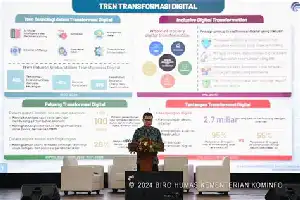
The Ministry of Health of the Republic of Indonesia (Kemenkes RI) together with the United States Centers for Disease Control and Prevention (CDC) held an emergency simulation or tabletop exercise (TTX) at Universitas Indonesia, Depok. The three-day event, running from July 7 to 9, 2026, aimed to test and refine the implementation of the Public Health Emergency Operations Center (PHEOC) Standard Operating Procedures (SOP) in the country.
The simulation exercise involved at least 60 participants from both national and provincial levels. Participants included medical personnel, representatives of public health laboratories, the Health Quarantine Authority (BKK), and representatives from the ASEAN BioDiaspora Virtual Center (ABVC). To test the effectiveness of cross-sector coordination, a dengue fever outbreak handling scenario was selected as the simulation model for the activity.
Throughout the simulation, participants were tested on their ability to execute the entire health emergency response chain. This process included early detection, incident report verification, real-time situation analysis, impact risk assessment, tactical coordination, and resource allocation. This direct testing is essential to ensure that all operational procedures run smoothly when facing a real health crisis in the field.
Deputy Director of CDC Indonesia, Ken Chen, emphasized that rapid response and early preparedness are key to breaking the chain of disease transmission before it escalates into a global pandemic. He added that strengthening communication, sectoral coordination, swift decision-making, and the reliability of early detection systems form a crucial foundation for public health resilience.
Echoing these sentiments, the Director of Surveillance and Health Quarantine at the Indonesian Ministry of Health, Dr. Sumarjaya, stressed that the PHEOC SOP must not merely be a formality document on paper. The procedure must serve as a ready-to-use tactical instrument. Through regular evaluations and intensive simulations like this, the government can map the strengths of the national health defense system while identifying gaps that need improvement.
This strategic partnership between the Indonesian Ministry of Health and the US CDC is part of a long-term commitment to enhance health crisis response capacity in Indonesia. The collaboration focuses on periodic training for rapid response teams, modernizing emergency operations centers, and improving cross-sector coordination to make Indonesia more resilient against future infectious disease threats.