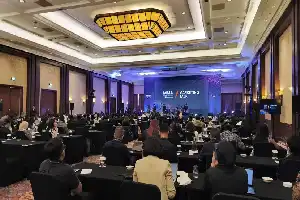
Coordinating Minister for Food Affairs, Zulkifli Hasan, officially introduced the Organic Waste Processing (Lahsamor) technology, a research product of the National Research and Innovation Agency (BRIN), in Denpasar, Bali. This innovation is expected to be an effective solution in reducing the volume of household waste entering landfills (TPA) on the Island of the Gods.
During the Waste Sorting Alert event held at Renon Field, Zulkifli emphasized that the main key to solving the waste problem is the discipline of sorting at the upstream level. The Lahsamor device is specifically designed to make it easier for the public to manage daily organic waste with a compact and efficient system.
Lahsamor technology has operational advantages over conventional composting methods. This tool allows users to input 0.5 to 1 kilogram of organic waste daily, then simply turn a lever to process the compost. The resulting compost can also exit automatically without requiring additional ingredient mixtures or troublesome manual retrieval.
Zulkifli hopes this innovation can be scaled up to a larger capacity, such as for schools or offices, reaching up to 50 kilograms per day. He emphasized that Lahsamor is not a replacement for traditional waste management like 'teba' in Bali, but rather a supporting alternative for residents with limited yard space at home.
In addition to encouraging the use of Lahsamor, the government also plans to implement Waste-to-Energy (PSEL) technology in Bali starting July 8, 2026. This step is taken in response to emergency waste management conditions in various regions, to avoid the risk of hazards such as fires or accidents at open dumping sites.