Vietnam's textile and garment sector is now at a crucial crossroads. After recording export growth of US$22.2 billion in the first half of 2026, industry players are forced to quickly move away from low-cost manufacturing models and shift toward a higher-value and sustainable production ecosystem.
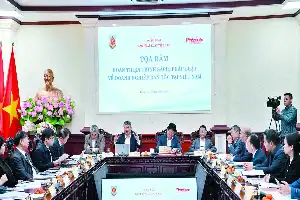
The Vietnam Textile and Apparel Association (VITAS) highlighted the shifting challenges of global trade, particularly regarding strict regulations on the circular economy and carbon footprint in Europe. These requirements have now become mandatory standards for businesses wishing to continue receiving orders from international markets. This pressure is felt heavily, especially by small and medium-sized enterprises (SMEs) that have to bear the high costs of ESG compliance and technological modernization.
As a strategic response, VITAS has established four specialized committees focusing on fashion development, international business, sustainable development, and digital technology innovation. This step aims to coordinate industry actions to secure the domestic supply chain, given that Vietnam's dependence on imported raw materials still stands at 60 to 70 percent.
Global economic uncertainty, marked by high inflation and soaring logistics costs of up to 40 percent, has forced large companies such as May 10 Corporation and Hung Yen Garment to undergo drastic restructuring. They are now implementing flexible smart production models to meet market demand for products with complex designs but increasingly shorter delivery times.
Meanwhile, the Vietnam National Textile and Garment Group (Vinatex) emphasized the importance of cash flow efficiency and inventory optimization for member companies. Amid the threat of declining orders for the fourth quarter of 2026, market diversification and investment in green infrastructure, such as the use of solar power and factory automation, are key to the long-term sustainability of Vietnam's textile industry.