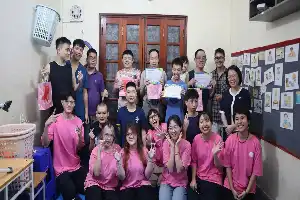
The Food Technology Study Program at Universitas Muhammadiyah (UM) Bandung initiated a Community Service (PKM) program in Manjahlega Village, Rancasari District, Bandung City, on Sunday (2/8/2026). This program integrates verticulture farming methods with innovations in processing spices as functional food to anticipate diabetes in urban communities.
Supported by the BIMA Grant funding from the Ministry of Higher Education, Science, and Technology (Kemendiktisaintek), this activity is focused on addressing land limitations in densely populated areas. Verticulture farming serves as a solution so that residents can utilize narrow yards into productive land that produces healthy food with economic value.
The Chief Organizer of PKM, Sakina Yeti Kiptiyah, explained that the high prevalence of diabetes in Indonesia prompted her team to formulate preventive measures through the utilization of local spices. In addition to being taught vertical farming, residents were equipped with skills to process the harvest into functional food products ready to be marketed with attractive packaging and branding strategies.
Head of the Food Technology Study Program at UM Bandung, Khairiah, appreciated the real contribution of academics in solving problems in society. In its implementation, the university collaborates closely with the Karang Taruna (youth organization) of Manjahlega Village and local RT and RW leaders to ensure the sustainability of the empowerment program.
The Chairperson of Karang Taruna Manjahlega, Salma Sabila Nur Shabrina, welcomed this collaboration positively as it provides creative space for the younger generation to learn entrepreneurship based on local potential. Meanwhile, the Chairman of RW 10, Ridwan Subakti, added that this urban farming education is highly synchronized with ongoing environmental programs, such as the Buruan SAE (Healthy, Natural, Economic) program and the waste-free zone initiative.
The product downstreaming aspect was also strengthened through marketing strategy training provided by Communication Science lecturer at UM Bandung, Euis Evi Puspitasari. Through strengthening brand identity, it is hoped that the spice-processed products made by Manjahlega residents will not only benefit family health but also be able to penetrate a wider market as a new flagship commodity.