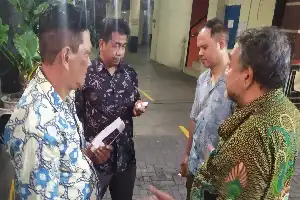
The Ministry of Environment (KLH) of the Republic of Indonesia expressed high appreciation for the commitment of the Sepuluh Nopember Institute of Technology (ITS) Surabaya in promoting sustainable development. This appreciation was delivered directly by the Minister of Environment, Mohammad Jumhur Hidayat, while personally inspecting various environmental management technology innovations at the ITS Rectorate Building.
One of the innovations that attracted attention was the ITS COMPOStech, a smart composter machine (ecosmart composter) capable of processing up to 50 kilograms of organic waste per day. This technology only requires a maximum of 20 hours per cycle to convert food scraps and leaves into compost, and is designed to minimize odor and save space. Minister Jumhur considers this tool to have great potential for resolving waste issues in the tourism sector, hospitality industry, and the kitchens of the Nutrition Fulfillment Service Units (SPPG).
In addition to the composter, the ITS Mobile Water Treatment, which adopts electrocoagulation technology, was also exhibited. This portable clean water treatment system is highly flexible for operation in remote areas and regions affected by natural disasters. When synergized with the composter machine, this technology is believed to be a complete solution for handling liquid and solid waste in the culinary industry.
In supporting the circular economy concept, ITS also introduced a biology-based recycling innovation using superworms to decompose styrofoam (EPS) plastic waste. On the other hand, there is the Siklusin application, which functions to monitor waste transaction flows in real-time from customers to the recycling industry, aimed at providing accurate data for government policy formulation.
The Rector of ITS, Prof. Dr. (HC) Ir. Bambang Pramujati, welcomed the support from the Indonesian Ministry of Environment and emphasized the campus's readiness to mass-produce this technology by collaborating with industrial partners. ITS itself is currently implementing a roadmap toward Net Zero Emission for the 2026-2030 period, as a concrete manifestation of its contribution to the Sustainable Development Goals (SDGs).