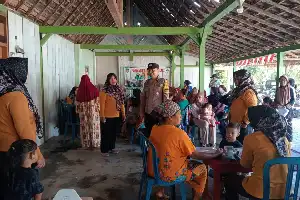
The government of Ben Cau Commune recently organized a strategic seminar on environmental governance and climate change adaptation. This activity is the result of intensive collaboration between the Ho Chi Minh National Academy of Politics, the Provincial Political School, and local authorities to synergize the party's leadership role with active community participation in environmental conservation.
A delegation from the Ho Chi Minh National Academy of Politics, led by Associate Professor Dr. Le Van Chien, provided guidance on strengthening disaster mitigation policies and green economic transformation. Over the years, Ben Cau Commune has integrated the environmental protection agenda into its annual work programs, including strict supervision of industrial facilities in the Moc Bai Border Gate Economic Zone and the management of agricultural pesticide waste.
However, during the forum, the Vice Chairman of the People's Committee of Ben Cau Commune, Trinh Van Dong, highlighted a crucial challenge: the long-standing influx of polluted wastewater from Cambodian territory into Rung Dau hamlet. In addition, the periodic blackening of the Vam Co Dong River, which triggers fish deaths, has become a serious concern that remains an environmental burden for local residents.
Responding to this issue, Dr. Vu Thai Hanh emphasized the importance of sustainable solutions through transboundary environmental diplomacy and raising public awareness. On the other hand, Associate Professor Dr. Le Van Chien asserted that environmental protection is not just the government's duty, but a shared responsibility. Residents are encouraged to be more active in monitoring, detecting, and reporting any potential environmental violations around them.
In closing, the local government committed to addressing all resident complaints transparently. By strengthening this governance, it is hoped that Ben Cau Commune can build better resilience against the threats of climate change and minimize pollution levels that directly impact the social life and agricultural productivity of its residents.