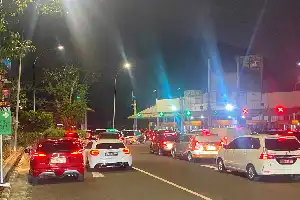
Jakarta and regions beyond its reach often have a wide perception gap. For some residents of the capital, the map of Indonesia seems to center only on the Jabodetabek area, Bandung, and Bali. This phenomenon is clearly reflected in how Demak, a history-laden regency in Central Java, is often misunderstood by newcomers working in Jakarta.
One of the most common misconceptions is the assumption that the entire Demak region has submerged due to tidal flooding (rob). Narratives frequently circulating on social media regarding coastal conditions in Sayung lead Jakarta residents to assume that this area has become a new 'Atlantis'. In reality, however, the area affected by tidal floods is only certain coastal zones, while the majority of Demak continues to operate normally on dry land.
Besides natural disasters, capital residents' entertainment standards—which heavily rely on malls, modern cinemas, and large shopping centers—are often used as their benchmark to evaluate a city. Upon learning that Demak lacks similar lifestyle facilities, an exaggerated sense of pity arises. They assume that the absence of malls is synonymous with loneliness and a lack of recreational outlets for local residents.
However, this mindset ignores the fact that Demak has a vastly different tourism identity. Rather than seeking entertainment in shopping centers, Demak's pulse of tourism centers on religious and historical tourism, such as the Great Mosque of Demak and the Tomb of Sunan Kalijaga in Kadilangu. These destinations consistently attract millions of pilgrims from across the archipelago every year.
In the end, the debate over life in Demak versus Jakarta is merely a reflection of a strong Jakarta-centric mindset. What big city residents consider boring actually serves as a source of economic strength and spiritual serenity that keeps Demak vibrant and relevant to this day.