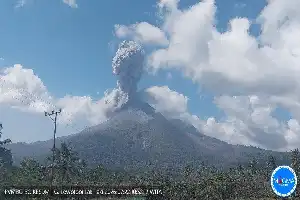
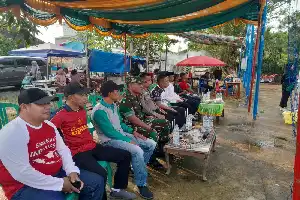
The Ciamis Regency Government is collaborating with academics and various stakeholders to formulate a blueprint for the development of the Mount Sawal area. This strategic step was discussed in a Focus Group Discussion (FGD) initiated by Galuh University (Unigal) in Medanglayang Village, Panumbangan District, Ciamis, to unify the vision of regional management, which has so far been considered to run sectorally.
Professor of Ecology at Galuh University, Prof. Dr. Dadi, M.Si., highlighted the importance of aligning forest protection with the economic welfare of residents around the buffer zone. According to him, the nature conservation approach must not neglect the basic economic needs of the local community. The concept of planting a green belt through agroforestry methods is considered a concrete solution to maintain ecological functions while increasing the income of local residents.
In addition to focusing on economic improvement, Unigal is also initiating an ecological literacy program for the community. This program aims to equip residents with a deep understanding of the importance of preserving the wildlife sanctuary and minimizing potential conflicts between humans and wildlife, such as the Javan leopard, which often enters residential areas.
Meanwhile, the founder of Galuh Sinergi, Cornell Sumardi, expressed his readiness to make the Medanglayang area a pilot project for conservation-based investment. His party plans to build a local product exhibition center, a tissue culture laboratory, and lodging facilities for researchers and tourists. The entire program is designed to open access to new markets and technologies without changing the community's traditional cultivation patterns.
From the environmental regulation perspective, the Head of the KSDA Region III Ciamis, Achmad Arifin, reminded that the status of Mount Sawal as a Wildlife Sanctuary limits human activities within the core zone. Nonetheless, the surrounding buffer zone can still be utilized on a limited basis for educational activities, research, and nature tourism. This effort is also in line with the ongoing Java-Wide Leopard Survey to update data on the habitat of this protected species.