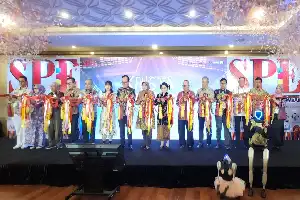
The Ministry of Hajj and Umrah (Kemenhaj) of the Republic of Indonesia officially opened the National Working Meeting (Rakernas) for the Evaluation of the 1447 H/2026 M Hajj Pilgrimage. Titled "Continuous Improvement, Delivering Humane, Professional, and Adaptive Hajj Services," this forum is a crucial platform for shaping the strategic policy direction of Indonesia's future Hajj services.
The Secretary-General of the Ministry of Hajj, Teguh Dwi Nugroho, emphasized that this meeting is not just a routine annual agenda, but a concrete effort to create a stronger Hajj ecosystem. The evaluation covers the entire service chain, starting from Hajj ritual preparation (manasik), operations in Saudi Arabia, to the phase of pilgrims returning to the homeland.
There are three main targets in this meeting, namely identifying technical and non-technical obstacles, measuring the achievement of service targets such as accommodation and health, and formulating policy recommendations for the upcoming Hajj season. Discussions also touched upon vital aspects such as officer recruitment, health capability (istithaah), to digital transformation in the Siskohat system and the Kawal Haji application.
A total of 967 participants, consisting of central and regional Ministry of Hajj officials, attended the forum held at the Pondok Gede Hajj Dormitory, Jakarta. In addition to formal discussion sessions with strategic partners such as Commission VIII of the DPR RI and BPK RI, participants also took part in a joint retreat with the TNI and Polri to strengthen discipline and collaboration among field officers.
Through this forum, the Ministry of Hajj is committed to building a responsive work culture to ensure pilgrims receive more comfortable and secure services. The recommendations resulting from this meeting are expected to serve as an applicable policy foundation for raising national Hajj implementation standards in the future.