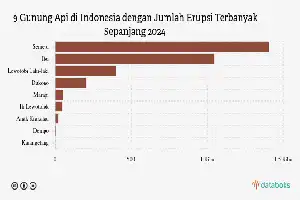
Amidst the circulation of misinformation on social media regarding a massive eruption of Mount Anak Krakatau, geological authorities have confirmed that the volcano's status is currently at Level III or Alert (Siaga). As an active volcano born from the caldera left by the major 1883 eruption, Anak Krakatau remains a focus of intensive monitoring due to its dynamic geological characteristics in the Sunda Strait.
History records that its parent eruption in 1883 was one of the deadliest volcanic disasters in the world. Learning from that event, experts continue to watch every movement of Anak Krakatau. One significant event occurred in December 2018, when a partial collapse of the volcano's body triggered a volcanic tsunami that had fatal consequences for the coastal areas of Banten and South Lampung.
The status upgrade to Alert in early July 2026 was based on a surge in seismic activity, including shallow volcanic earthquakes and increased gas emissions. Technically, potential future eruptions could range from Strombolian to Vulcanian types. The most anticipated risk scenarios include the ejection of incandescent material, volcanic ash fall that could disrupt air mobility, and potential respiratory health issues for communities around the affected areas.
The public is urged to remain calm but vigilant by referring only to official information from authorized agencies. Continuous monitoring is being carried out to mitigate potential hazards, considering the growing nature of the volcano through repeated eruptive phases that demand high preparedness from local governments and coastal residents.