The Ministry of Health (Kemenkes) continues to accelerate the transformation of the national health system, focusing primarily on strengthening primary care. This strategic effort was discussed in depth at the Leimena Conference 2026: Indonesia Primary Health Care Scientific Meeting, a scientific forum held at the National Research and Innovation Agency (BRIN) Building in Jakarta. The forum serves as a collaborative space to disseminate research findings, innovations, and best practices to improve the quality of basic healthcare facilities in Indonesia.
The Director General of Primary and Community Health at the Ministry of Health, Maria Endang Sumiwi, explained that post-pandemic healthcare reform now adopts a community life-cycle approach, shifting from the old model based on work programs. This new service model, which underwent trials during the 2022–2023 period, has now been implemented nationally in around 9,000 Puskesmas, equivalent to 87 percent of the total Puskesmas across the country.
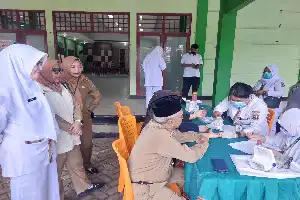
In addition to Puskesmas, the service restructuring also targets the smallest unit in the community, namely the Posyandu. The Ministry of Health noted that 303,209 active Posyandu are now routinely providing life-cycle-based health services every month. To maintain service quality, the government has registered around 1.5 million Posyandu health cadres, with 485,000 of them having passed competency tests based on a standard of 125 basic skills.
On the same occasion, the Ministry of Health officially launched new guidelines for health services at the village and sub-district levels. Under these guidelines, healthcare workers are required to understand the characteristics and profiles of residents in detail, including mapping pregnant women, elderly living independently, and groups with disabilities. This step is expected to deliver health services that are more personalized, targeted, and aligned with the actual needs of the local community.
With the theme "Integrating Research into Primary Health Care", this national event was attended by 450 in-person participants from various institutions and fully supported by global partners such as the WHO, UNICEF, Global Fund, Australian DFAT, and the Bill & Melinda Gates Foundation. The committee also conducted a strict curation of 700 submitted research abstracts, with selected scientific works to be officially published through the Faculty of Public Health, Universitas Indonesia.