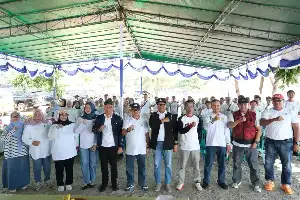
A working meeting between Commission IX of the House of Representatives (DPR RI) and the Ministry of Health at the Parliament Complex, Senayan, Jakarta, revealed the slow realization of the budget in the basic health sector. A member of Commission IX of the House of Representatives from the PKS Faction, Netty Prasetiyani, strongly criticized the budget absorption of the Directorate General of Primary Health and Community, which currently only stands at 38.7 percent. According to her, this slow absorption has a major potential to hinder the national healthcare service transformation program currently being intensively promoted by the government.
Netty emphasized that administrative achievements such as an Unqualified Opinion (WTP) should not merely be a display of achievement. For her, the real indicator of success is how well these health programs are implemented optimally and their benefits directly felt by the wider community, especially in the promotive and preventive aspects.
As the vanguard of public health, the primary health sector includes optimizing community health centers (Puskesmas), integrated health posts (Posyandu), health education, immunization, and early disease prevention. Netty emphasized that the low budget realization in this sector must be evaluated immediately because it has the potential to reduce public health status due to delayed preventive care before citizens require curative action in hospitals.
The PKS legislator also presented field findings regarding the heavy workload faced by Posyandu and PKK cadres in the regions following the obligation to meet six Minimum Service Standards (SPM). This burden is considered disproportionate to the operational support they receive. On the other hand, services at Puskesmas are also deemed ineffective because medical staff are still preoccupied with time-consuming administrative matters.
In addition to internal issues, Netty also highlighted the minimal absorption of funds from foreign loans and the low regional claim submissions for priority programs such as tuberculosis screening, HPV DNA screening, and congenital hypothyroidism screening. She urged the Ministry of Health to simplify the claim mechanism and increase socialization so that important targets, such as TB elimination by 2030, can be achieved on time.