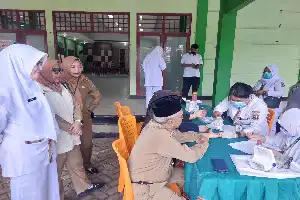
A health challenge that has persisted for decades in Indonesia, namely iron deficiency anemia, is now a serious concern. Data shows that one in four toddlers, as well as one in four pregnant and lactating mothers in the country, are still exposed to the risk of iron deficiency. This condition is considered not just a clinical issue, but a real threat to the nation's economic future.
Medical & Scientific Affairs Danone Indonesia, Dr. dr. Ray Wagiu Basrowi, MKK, PhD, emphasized that iron deficiency in the early stages of life has a direct impact on child brain development. Based on research, children with low iron levels tend to have decreased working memory capacity. This has implications for hindered learning processes, problem-solving, and decision-making, resulting in lower academic achievement.
In the long term, this decline in cognitive quality will trigger a crisis in the quality of human resources (HR) entering the workforce. Dr. Ray emphasized that low labor productivity resulting from early iron deficiency can harm national economic growth. Therefore, addressing this issue must be viewed as a strategic investment in human development.
As a solution, experts have formulated three main pillars: increasing education, strengthening research and innovation, and expanding access to screening or early detection. Public education is the foundation for pregnant women to be more proactive in maintaining their health, given that the risk of anemia can be transmitted from the womb, such as the risk of premature birth and low birth weight.
Multisectoral collaboration is the key to the success of this effort. Through digital approaches and innovative non-invasive screening tools such as the 'Iron Calculator', Danone Indonesia, together with the government and academics, is working to expand the reach of early detection. With the integration of these three pillars, it is hoped that Indonesia will be able to reduce anemia rates and produce a more competitive next generation in the future.