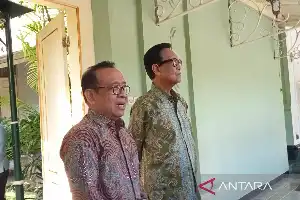
The Indonesian Ulema Council (MUI) officially launched a series of goodwill visits themed "Digital Silk Road" in China, starting Thursday (7/9/2026). The delegation of 24 central board members arrived in Guangzhou with a mission to strengthen digital-based dawah synergy, accelerate the halal economy, and deepen cross-border relations.
Head of the MUI Department for Information, Communication, and Digitalization (Infokomdigi), KH Masduki Baidlowi, who led the delegation, explained that choosing the theme "Digital Silk Road" was a response to global technological dynamics. According to him, the current dominance of algorithms and artificial intelligence (AI) challenges the scholarly authority of Islamic scholars (ulema), making the digitalization of dawah a necessity to remain relevant to modern society.
"Dawah can no longer be conducted solely through conventional means. We must adapt to the digital communication space so that the ulema can continue to guide the community amid increasingly complex information flows," said KH Masduki after coordinating with the Consulate General of the Republic of Indonesia (KJRI) in Guangzhou.
The agenda for the five-day visit includes strategic interactions with various parties, including the Guangzhou Islamic Association, as well as direct inspections of global innovation centers. The MUI delegation is scheduled to visit tech giants such as XAG Technology, Hytera Communications, BYD Company, and Mindray Medical to explore collaboration in drone-based agriculture, renewable energy, and medical technology.
The delegation, representing various internal MUI divisions—ranging from dawah, fatwa, to economics—will also study the patterns of developing the halal economic ecosystem in China. This visit is viewed as a concrete step in strengthening MUI's position in international diplomacy while addressing the digital divide between senior ulema and *digital natives* in the homeland.
The series of activities will conclude in Shenzhen on Monday (7/13/2026), where the results of this visit are expected to make a positive contribution to building institutional capacity and deepening strategic cooperation between Indonesia and China in the future.