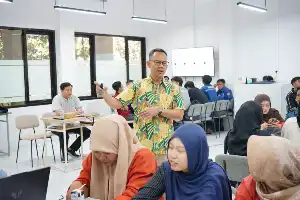
The Vietnamese government, through the National Foundation for Science and Technology Development (NAFOSTED), recently hosted a strategic workshop in Hanoi to finalize a draft of new financial mechanisms for national technology development. This step was taken as a concrete effort to shift away from the old model focused on cost management toward a more dynamic, result-oriented technology investment approach.
NAFOSTED Chief Accountant, Nguyen Thi Kim Thanh, emphasized that current funding policies are no longer relevant to the needs of developing high-risk, long-term strategic technology. Until now, the existing system has been considered a hindrance to innovation due to being overly rigid regarding input administration and failing to provide enough room for large-scale, globally competitive research development.
In the latest draft regulations, the government proposes six innovative financial mechanisms covering budget allocation based on the technology lifecycle—from the research stage, prototyping, to commercialization. This approach enables the disbursement of funds based on technical milestones, ensuring project accountability is no longer tied solely to piles of paperwork, but rather to tangible proof of output success.
One of the most striking points of this proposal is the suggested remuneration for key technology experts, such as chief engineers and technology architects, adjusted to international standards through purchasing power conversion. This bold move aims to attract and retain top talent in critical fields like AI, semiconductors, robotics, and quantum technology, anticipating fierce global competition for skilled human resources.
Through this paradigm shift, Vietnam hopes to build an innovation ecosystem involving close collaboration among the state, private sector, and research institutions. It is hoped that this new financial mechanism will serve as a solid foundation for implementing the National Science, Technology, and Innovation Program for the 2026–2030 period, while strengthening national technological sovereignty amidst increasingly progressive international cooperation dynamics.