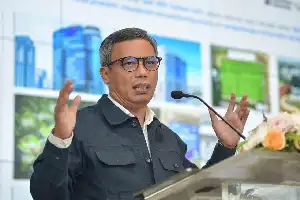
The adverse impacts of climate change on public health are no longer just a projection for the future, but a real threat happening right now. This warning was delivered by senior Kompas science journalist, Ahmad Arif, in a public discussion titled "Safeguarding the Right to Health in the Era of Climate Crisis" held in Jakarta on Monday (27/7/2026). The event also marked the launch of a new educational module from the Anti-Corruption Academy focusing on potential corruption in the health sector amidst the climate crisis.
Arif compared the Earth's current condition to a frog slowly being boiled alive. Most people do not realize that global temperatures have now surged by about 1.5 degrees Celsius warmer compared to conditions a century and a half ago. This rise in global temperature triggers various extreme weather phenomena, ranging from prolonged droughts to tropical cyclones.
The most worrying impact is the increased risk of death from extreme heat stroke. Arif referred to this threat as a silent killer because Indonesia's health data system is not yet capable of specifically identifying this risk. As a concrete example, last June, two deaths were recorded that were strongly suspected of being related to exposure to extreme heat, namely a training participant in Balikpapan and a marathon runner.
Furthermore, collaborative research between Arif and Lapor Iklim detected an increasing trend in farmer mortality rates while working in rice fields. This health threat was also highlighted by the World Health Organization (WHO) as a crucial issue requiring high vigilance. In addition, environmental degradation such as deforestation in Kalimantan and Sumatra has also triggered the spread of new diseases, including a variant of malaria transmitted from primates to humans.
To anticipate more severe impacts, Arif called for the implementation of the One Health concept, an integrated approach that recognizes the close connection between human, animal, and environmental health. He also urged the importance of transparency in climate adaptation budgets, strengthening health systems responsive to new threats, involving vulnerable groups in policy formulation, and consistently enforcing environmental laws.