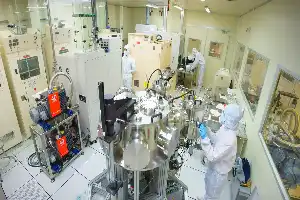
There has been a major shift in the interests of prospective new students in college entrance selection this year. Majors in the STEM fields (Science, Technology, Engineering, and Mathematics) recorded a significant surge in enrollment, displacing the dominance of social sciences and economics which have long been public favorites. Based on the latest data, more than half of the total applicants are now targeting science and technology-based study programs.
Out of approximately 874,800 prospective students who registered, nearly 467,600 people, or equivalent to 53.45 percent, chose the STEM cluster. Accumulatively, the number of applications for this cluster reached 2.37 million files, accounting for about a third of the total national selection applications. Computer Science, Information Technology, and Natural Sciences were the most sought-after study programs by applicants this year.
Universities warmly welcomed this phenomenon as a positive signal for the future of the national technology industry. Vu Duy Hai, Head of Admissions at a leading technological university, revealed that this figure is the highest in recent years. Previously, the proportion of applicants in STEM fields only ranged between 30 to 40 percent, while economics always dominated the main choice share.
Education observers analyze that there are three main factors behind this trend change. First, there is a strong government commitment through strategic policies to encourage national technology mastery. Second, the rapid development of global innovations such as artificial intelligence (AI) is getting closer to students' daily lives, motivating them to be part of these developments.
The third and strongest driving factor is the presence of the national scholarship program. This policy provides significant financial support for students choosing core technology and basic science majors. This scholarship scheme not only eases tuition costs but also serves as a guarantee that graduates in this field are highly needed by the job market in the future.
Although this initial interest is very encouraging, local education authorities emphasize the importance of maintaining the quality of the teaching and learning process through to graduation. The next challenge is to ensure these students can complete their studies successfully and be optimally absorbed into the industrial world. Currently, the proportion of STEM students is recorded at only 29 percent, with an ambitious target to reach 35 percent by 2030.