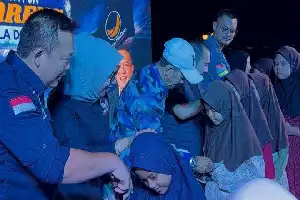
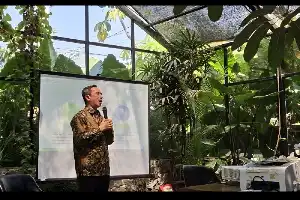
The Directorate General of Defense Strength of the Ministry of Defense of the Republic of Indonesia (Ditjen Kuathan Kemhan RI) through the Directorate of Health implemented a social service and medical assistance program for the community in Napan, North Central Timor Regency, East Nusa Tenggara, on Thursday (9/7/2026). This activity is an integral part of the Ministry of Defense's Strategic Plan 2025–2029, which prioritizes the state's presence in border regions.
Led directly by the Director of Health of the Directorate General of Defense Strength of the Ministry of Defense, First Marshal of the Indonesian National Armed Forces (TNI) dr. Mukti Arja Berlian, Sp.PD., Sp.KP., M.M., FINASIM, this activity was carried out thanks to cross-agency synergy involving the National Border Management Agency (BNPP), the Regional Government of North Central Timor Regency, and local TNI personnel. This collaborative step aims to strengthen access to basic services for residents living in remote areas.
During the event, the medical team provided general medical treatment, pharmacy services, and laboratory tests for the early detection of non-communicable disease risks such as diabetes, hypertension, and metabolic disorders. Blood sugar, cholesterol, and uric acid tests were conducted as part of the Free Health Check Program (CKG) to ensure the public receives medical follow-up and adequate health education.
In addition to providing health services, the government also distributed social assistance in the form of basic food packages (sembako) and additional nutrition for residents in Napan Village, Tes Village, and Sainoni Village. This initiative is viewed as a strategic effort to improve social welfare while strengthening community resilience, which is a vital component of the comprehensive national defense system.
First Marshal of the TNI dr. Mukti Arja Berlian expressed his highest appreciation to the local government, community leaders, and healthcare workers who supported the success of the agenda. The presence of this program is expected to stimulate health independence for border residents and reflect the central government's concern for social stability on Indonesia's frontline.